
This one of those subjects that everyone has an opinion on.

I will be giving mine, it relates to my car with it’s bog standard Points Ignition, original Cam, and original Rochester Quadrajet. It isn’t necessarily right or wrong, just the way I do it.

I’ll start off by saying that I owned my 1st HQ Statesman for 18 years, and I thought I was pretty good at tuning it. Technically I guess I was when it came to fitting and gapping Points and Sparkplugs, adjusting the Timing etc, but it turns out I was missing some pretty basic info and understanding. For example, I always thought that the way you adjusted the “Idle Mixture” on the Carby was to screw the adjusters in until they were fully seated, and then wind them out 1 ½ turns. Well I have since discovered (since I’ve owned my current HQ Statesman), that this is merely the starting point. And that what you are supposed to do is use a Vacuum Gauge and adjust each Mixture Screw for maximum vacuum reading on the Gauge. But more on that later.

Tools Required

Again, this is just what I use (photos of each shown below).

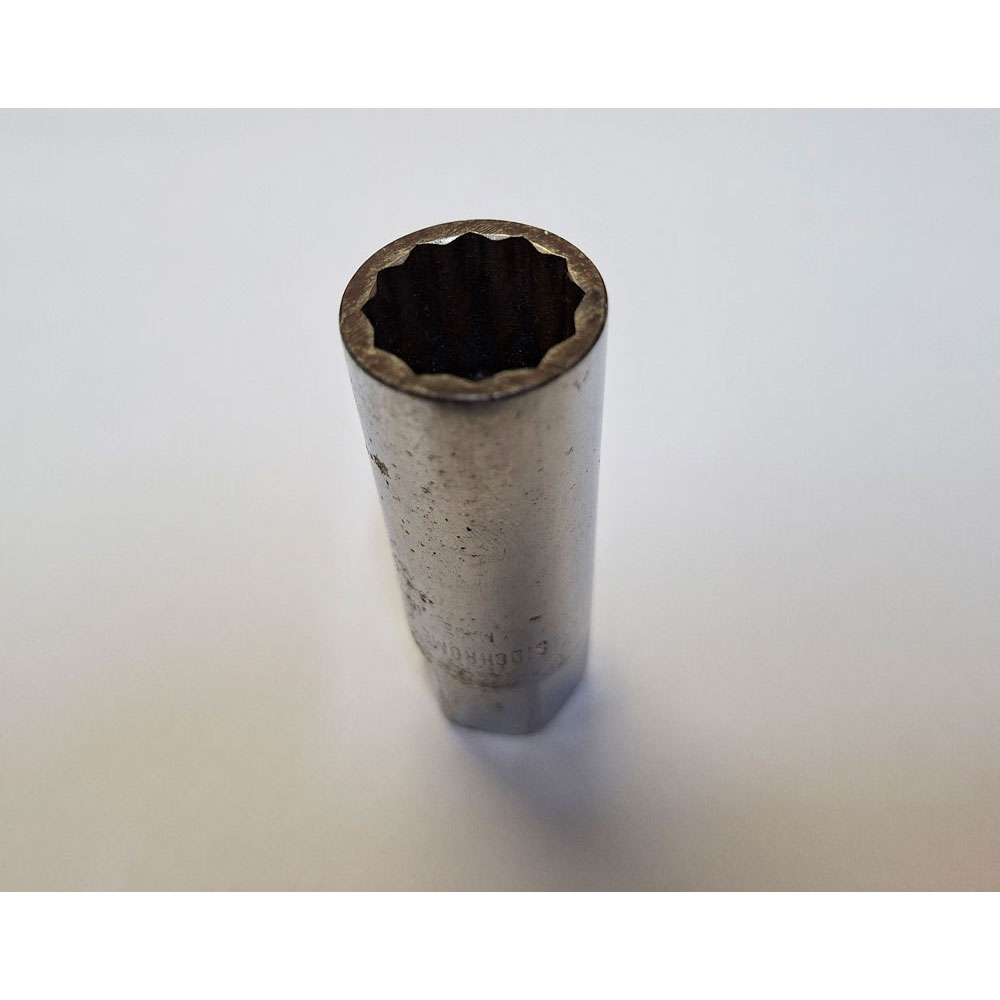
  • The usual Hand Tools. ie. Flat Tip Screwdriver, Socket Set with suitable Sparkplug Socket (Imperial, not metric, of course). On the subject of the Sparkplug Socket, I have modified a Sparkplug Socket by grinding down the end so that the taper inside the socket is depleted. This allows you to get the socket right on and down on the Sparkplug. More on this later.
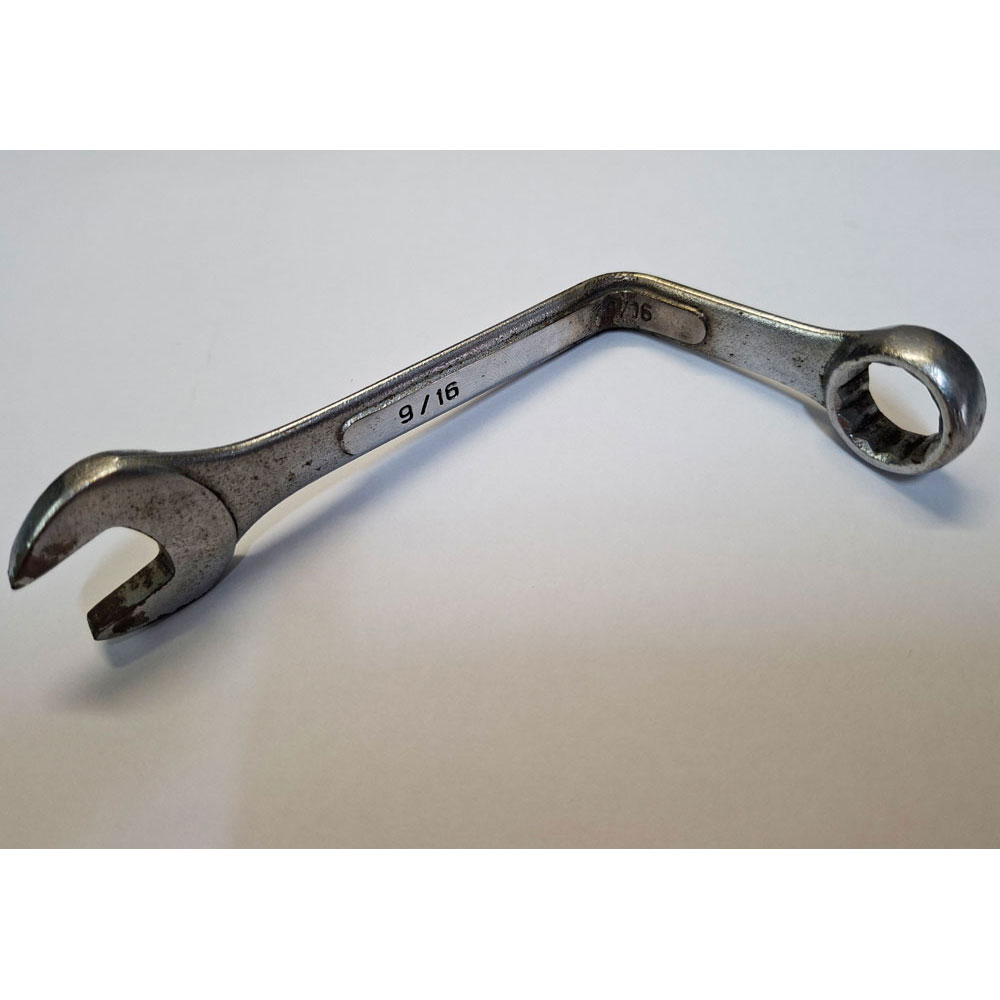
  • A modified 9/16″ Ring Spanner. I have a 9/16″ Open End/Ring Spanner that I heated in the middle, and bent at a right angle. Anyone who has tried to loosen and tighten the bolt that holds the Distributor in place knows just how much of a pain it is to get at. By using a modified Open End/Ring Spanner, you can get at the bolt head much easier.
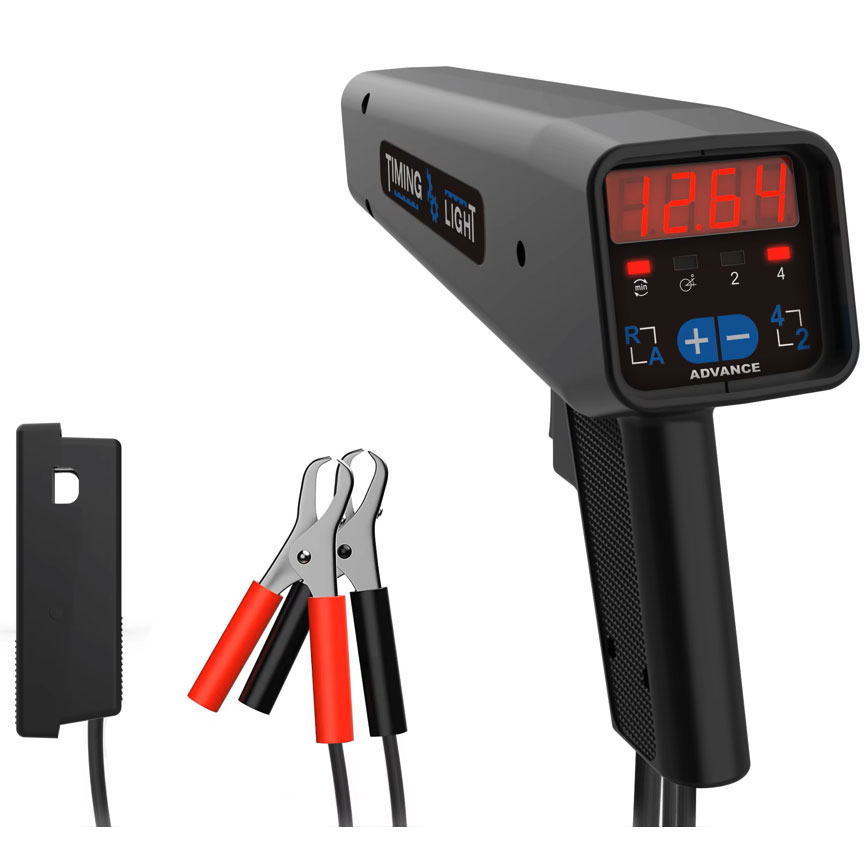
  • Timing Light. I use a digital Timing Light that you set the amount of timing you want on the LED Readout. For example if you want 6 degrees, you adjust the readout to 6. I’ll discuss more of how this works later.
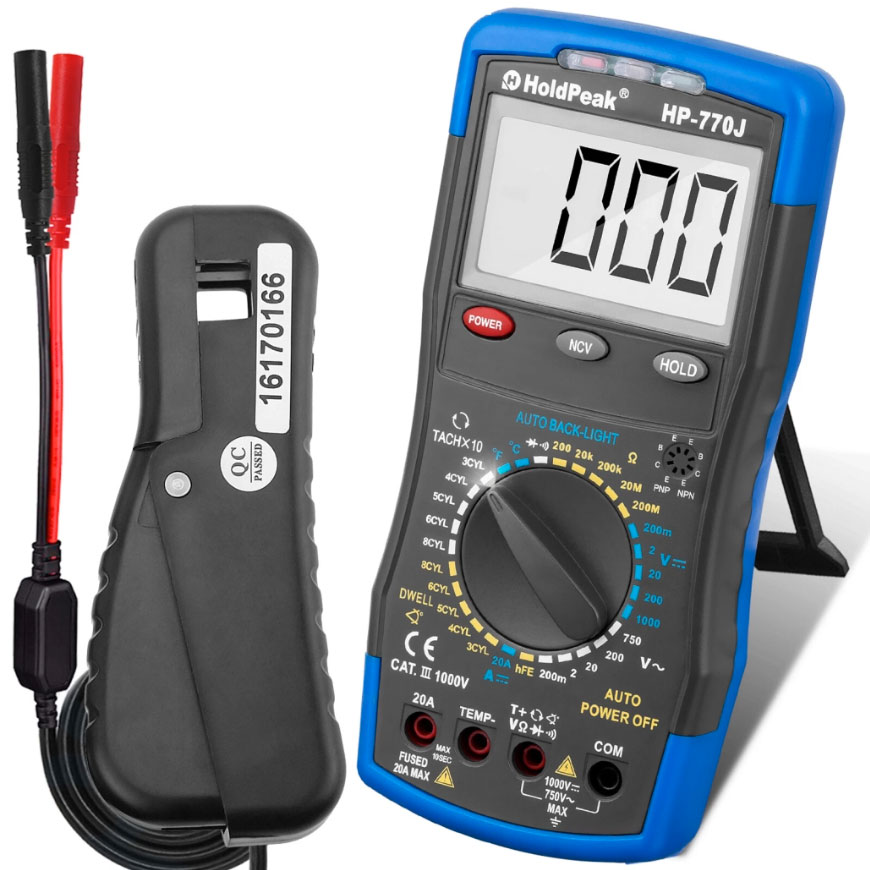
  • Dwell Angle/Tacho Meter. Now this is where I differ from a lot of people who swear by using Feeler Gauges to set the Point Gap. I much prefer to use a Dwell Meter, not only to set the Gap, but adjust the Dwell Angle. Again, more to follow later.
Parts that I like to use (you may or may not need all of these)

  • ACDelco R44T Sparkplugs, but obviously you can use any suitable Sparkplugs with the right specs like the NGK BPSFS.  The letters and numbers on the ACDelco Sparkplugs mean this: R = Resistor type, 4 = 14mm thread, 4 = Heat Range, T = tapered seat shell design.
  • Bosch GB534 Ignition Contact Set (Points), and again, you could use any Points that suit, like the Fuelmiser S11V Contact Set.
  • Bosch GB536 Rotor, Part No 9231064300. Now here’s the thing with this part. It is no longer in production by anyone and almost impossible to source. I managed to find a couple of New Old Stock (NOS) items which I snapped up. But I have been told that there is a Ford Rotor that suits. Unfortunately I don’t have that information. It is the unavailability of this item which has seen a lot of people shift to Electronic Ignition. But I want my car as original as possible, hence the search for NOS. So you may have to just clean up your existing Rotor and re-use it.
  • Bosch GB926 Distributor Cap. Again, there are other manufacturers, but I like to use Bosch.
  • Bosch Sparkplug Leads. B63SI 63cm x 1, B71SI 71cm x 4, B76SI 76cm x 2, B84SI 84cm x 1, B45CSI Coil Lead.

Procedure

  • Set the Idle Mixture. If you haven’t done this before, it’s worth doing it. As I’ve said above, the starting point is to screw the Idle Mixture adjusters all the way in until they fully seat, then unscrew them 1 ½ turns. See the video below on how to do adjust the Idle Mixture Screws for maximum Vacuum. Obviously this is predicated on having a correctly functioning Carby. I mention this because I was looking at a friends HG Monaro which was fitted with a Rochester Carby, and we were going to adjust the Idle Mixture screws. We hooked up the Vacuum Gauge, but when we adjusted the Idle Mixture Screws, either all the way in or all the way out, there was zero change in the Vacuum reading. Clearly something was not right. Probably a blocked metering circuit, but in the end we couldn’t adjust the Idle mixture.
  • Removal and replacement of the Sparkplugs. They generally come pre-gapped, but you can double check first. They should be 0.8mm – 0.97mm or, 0.033 – 0.038 inches. Make sure that you don’t go all Arnold Schwarzenegger on them and over tighten them. They only need to be nipped up. I once had the unfortunate experience of breaking one (the porcelain). The Sparkplug was the Number 8 Sparkplug, and the car had Extractors fitted, and that Sparkplug was very difficult to get at. I couldn’t get the Socket onto it fully, and it was on a slight angle not square. And whoever had fitted the Sparkplug previously had used a lot of force tightening it, and in the process of trying to remove it, I broke the porcelain. At the time I had to crimp the Sparkplug Lead onto the exposed copper element that was left protruding just so I could drive the car. Grinding down a Sparkplug Socket gave me enough room to get the Socket on, and square, and I was then able to remove the Sparkplug.
  • The next thing I do is remove the Points, removing the Rotor first of course. The next procedure is where I differ from most people. Before I pull the points out, I rotate the the engine. You can do this by using a socket and bar on the front of the Harmonic Balancer, or if the Radiator Shroud and/or Fan are in the way, grab hold of one of the Fan Belts, and pull/push it. Rotate the Engine until the Cam on the Distributor shaft causes the Points to open fully, then I eyeball it to get an visual idea of how much gap there is, and use that as a starting point. This is obviously easier with two people, but I’ve done it heaps of times by myself.
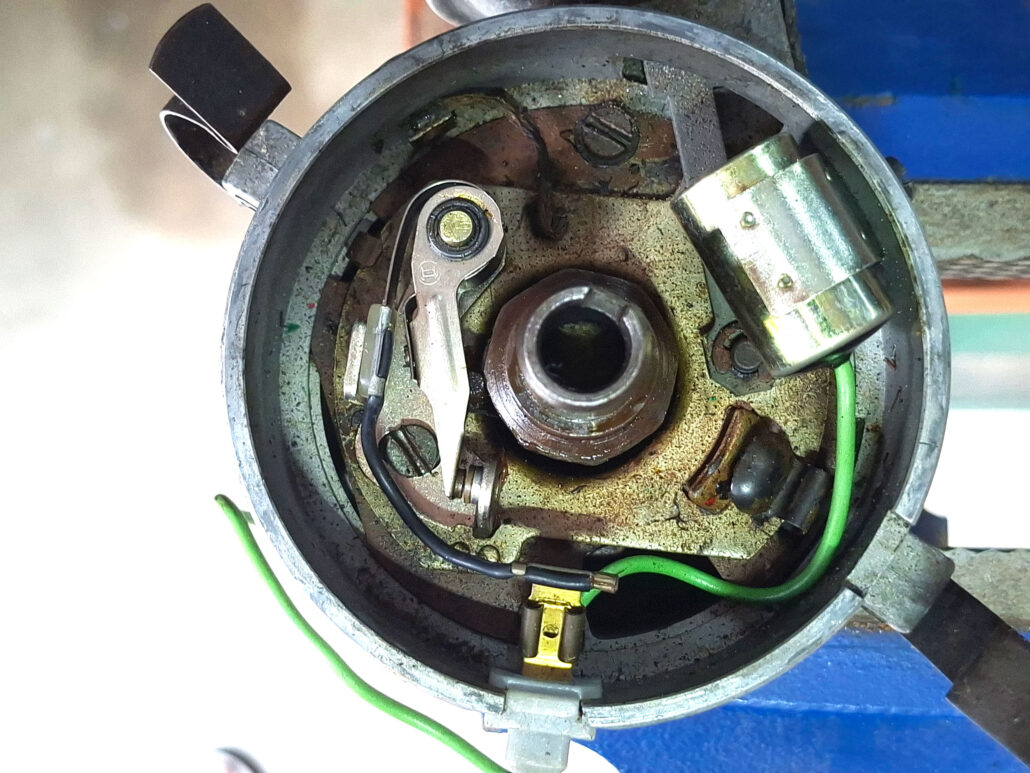
  • Once the Points have been removed, fit the new Points. Don’t fully tighten the screw holding the Points in place. You need to be able to close or open the gap, so the Points need to be able to move. Now this is where the eyeballing of the gap comes in. Using a Flat Tip Screwdriver, you can move the Points closer or further away from the Distributor Cam. A larger gap will decrease the Dwell Angle, whereas a smaller gap will increase the Dwell Angle. Get the gap to a point where it looks close to where the old Points were set. Then with the Dwell Meter connected, and with the Distributor Cap NOT fitted and in place, crank the engine. You can get a rough reading on your Dwell Meter and you will be able see if the Dwell Angle is close. It should be between 30-34 degrees. If it’s close, pop the Distributor Cap back on (a new one if it’s required), and try and start the car. Once the cars starts, recheck the Dwell Angle again and adjust as necessary. I usually manage to get the Dwell Angle set smack bang in the middle of the range at 32 degrees. Once you’re happy, tighten the screw that holds the Points in place, being careful not to move them and therefore change the Point Gap. If you decide to use a Feeler Gauge instead, the correct gap is 0.012 – 0.016 inches. But using a Dwell Meter will give you a much better result because you can get the exact Dwell Angle you want, a Feeler Gauge won’t. And one final point (excuse the pun). It’s a good idea to use an appropriate grease on the Distributor Cam to minimise wear on the Rubbing Block of the Points. The correct grease to use for this purpose is Bosch Ignition Points Grease (Ft 1 v4). This is the original, recommended “gold standard” grease, available in a small 45ml tube. But good luck trying to find it here in Australia. As a result, I use Permatex Dielectric Grease, which is a thick, high-temperature silicone grease, that works well as a substitute and is excellent at high temperatures. But use it sparingly. A little bit goes a long way. I put a tiny dob of the grease on my finger and smear it around the Distributor Cam, then crank the Engine over to make sure the Rubbing Block is lubricated. It is available from Supercheap Auto, Item No. 379868.The image below shows just how small the Points Gap is when the Rubbing Block is positioned on the peak of the Distributor Cam.
Top View Holden V8 Bosch Distributor and Points in HQ Statesman
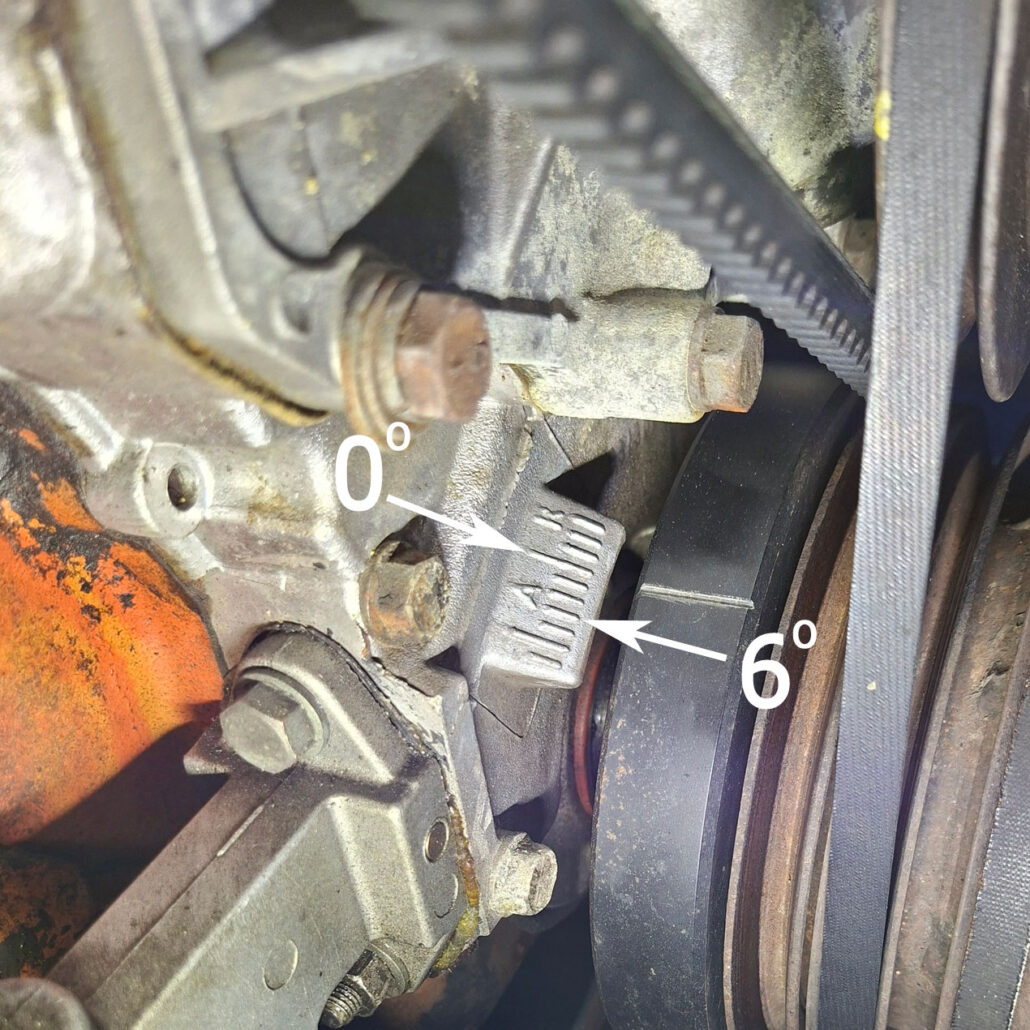
  • Now check the Timing. It should be 6 degrees Before Top Dead Centre (BTDC) with the Vacuum Advance hose to the Distributor disconnected and blocked. If nothing has changed, you most likely won’t have to adjust the timing. As mentioned, I use a Digital Timing Light that has an LED display. I set it for 6 degrees, and that means that when when you point it at the timing marks, you want it lined up at the 0 degree mark, not the 6 Degree mark. This is because the Timing light compensates. It’s much easier lining up the notch on the Harmonic Balancer with the “long” easier to see 0 degree mark than it is with the small 6 degree mark. Each mark is equal to 2 degrees. See image below:

Timing Marks Holden V8

  • If necessary, adjust the Timing. You do this by loosening the bolt that holds the Distributor in place, and stops it rotating, at the back of the Distributor. Then rotate it left or right to Advance or Retard the timing. If you don’t have a Digital Timing Light, set it to the 3rd Timing Mark. FYI, another advantage of a Digital Timing Light comes into play if you want to greatly Advance the Timing beyond what is available on the Timing Marks. You will see from the photo above that the Timing Marks stop at 12 degrees. But if you have a non-stock Engine/Cam, you might want to feed it more Timing, and advance it to say 15 degrees. That’s where a Digital Timing light is useful. You can set it for 15 degrees, and line up the mark on the Harmonic Balance with the Zero mark on the Engine block, and know you have exactly 15 degrees of Timing.
  • Recheck the Dwell Angle and readjust if necessary.
  • Check and adjust the Idle Speed. In my car, which is an Automatic with Airconditioning, it should be 500rpm, in Drive with the Aircon ON.
  • Then as a final check, I like to recheck Dwell and Timing, and if all is good, tighten the bolt that holds the Distributor in place.

How to adjust the Idle Mixture using a Vacuum Gauge

This is the Vacuum reading on my car after adjustment

© Copyright - HQ Statesman