

Unlocking the Secrets of Engine Health: Vacuum Tests Explained
Vacuum tests are among the most effective tools for diagnosing engine performance issues. By measuring the vacuum in the intake manifold, technicians gain valuable insights into engine health, pinpointing problems like compression, valve timing, ignition, or fuel delivery.
Understanding Vacuum Tests
A vacuum test measures the vacuum created by the pistons during their intake stroke. This reading reveals factors like compression, valve sealing, and ignition timing. Technicians use a vacuum gauge to connect to the intake manifold and observe the needle’s movement in inches of mercury (in. Hg).
How to Perform a Vacuum Test:
- Prepare Engine: Get the engine to normal temperature.
- Connect Gauge: Attach the vacuum gauge to the manifold.
- Start Engine: Let it idle and observe the readings.
- Record and Analyse: Note the readings and compare them with expected results.
What Do Vacuum Readings Reveal?
- Normal (17-22 in. Hg): Good engine condition.
- Low (below 17 in. Hg): Possible valve timing, ignition, or vacuum leaks.
- Fluctuating Needle: May indicate stuck/burned valves or uneven compression.
- Sharp Drop on Acceleration: Indicates a restricted exhaust system.
Common Issues Diagnosed:
- Stuck/Burned Valves
- Vacuum Leaks
- Compression Issues
- Exhaust Blockages
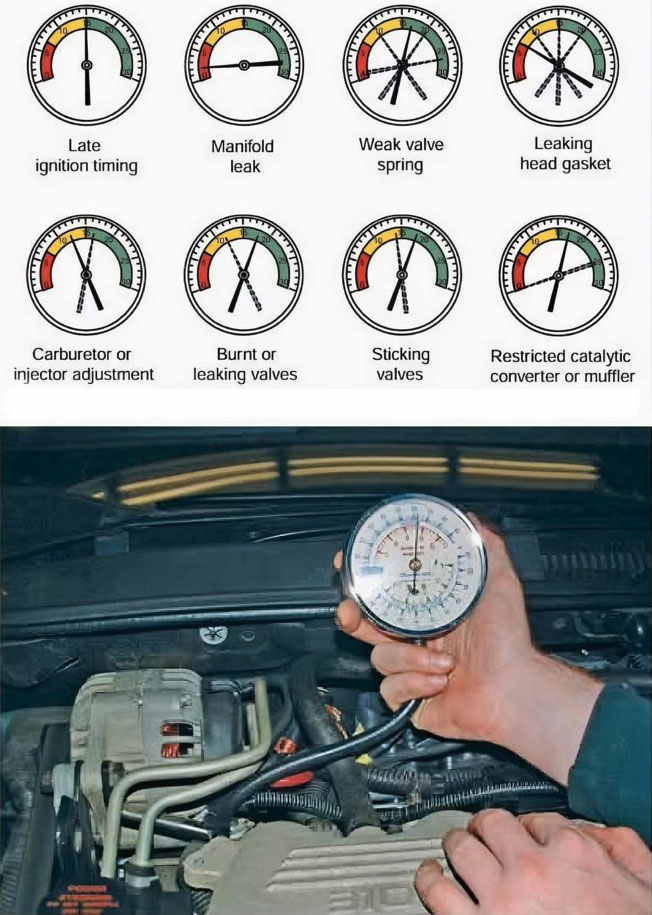
This was the vacuum measurement on our car after adjusting the Idle Mixture screws.